What “Newcomer” Really Means in the Bay Area
By: Mikey J Smith
For many students across the Bay Area, starting school means adjusting to a new teacher, a new classroom, or a new grade level. For others, it also means adjusting to an entirely new country.
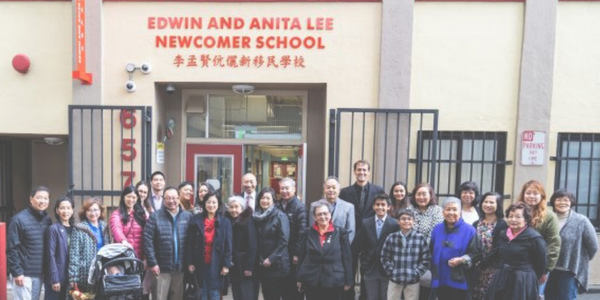
Schools like Edwin and Anita Lee Newcomer School in San Francisco exist specifically to support newly arrived immigrant students as they transition into life in the United States. Many students arrive speaking little or no English. Some are navigating an unfamiliar school system for the first time. Others are helping their families adjust to new jobs, housing situations, transportation systems, and communities while trying to adapt themselves.
For many Bay Area residents, the idea of a “newcomer school” may be unfamiliar. But these programs offer an important glimpse into the realities many immigrant families continue to face across our region.
Why Newcomer Schools Exist
San Francisco has long been shaped by immigrant communities, particularly through neighborhoods like Chinatown and the Richmond District. Today, immigrant families remain a major part of the Bay Area’s cultural and economic fabric.
Newcomer schools are designed to help students during one of the most difficult transitions imaginable: adapting to life in a new country while continuing their education. These programs often focus on English language development, cultural adjustment, and helping students build familiarity with the American school system before transitioning into more traditional classrooms.
For many students, this adjustment period extends far beyond academics. Starting over can mean navigating new social environments, unfamiliar customs, and the emotional strain that often comes with major life transitions.
The Challenges Many Newcomer Families Face
Despite the Bay Area’s reputation for innovation and economic opportunity, many immigrant families face significant financial and structural barriers upon arriving in the region.
The Bay Area remains one of the most expensive metropolitan regions in the country. Housing costs, transportation expenses, childcare, and the rising price of everyday essentials continue to place pressure on working families across the region. For newcomer families adjusting to an entirely new environment, those challenges can become even more difficult to navigate.
Language barriers can make accessing healthcare, housing resources, school systems, and public services more complicated. Parents may be working multiple jobs while trying to support their children as they adapt to a new educational environment. Students themselves often take on responsibilities beyond the classroom, helping translate documents, interpret conversations, or assist family members with navigating daily life.
These realities are often invisible to the broader public, even though they shape the daily experiences of many Bay Area families.
Looking Beyond the “Model Minority” Stereotype
Conversations around Asian communities in the Bay Area are often oversimplified.
The term “Asian American” is frequently discussed as though it represents a single experience, despite enormous economic, cultural, and linguistic diversity.. While some Bay Area Asian populations are closely associated with the region’s technology economy, many immigrant and refugee communities continue to experience housing instability, financial insecurity, and limited access to resources.
These realities are often overlooked because of the persistent “model minority” stereotype that suggests Asian communities are uniformly thriving.
Schools like Edwin and Anita Lee Newcomer School help tell a more complete story—one that includes resilience, transition, uncertainty, and adaptation.
Why Educational Support Matters
Schools like Edwin and Anita Lee Newcomer School help tell a more complete story—one that includes resilience, transition, uncertainty, and adaptation.
Access to school supplies, welcoming classroom environments, and educational support systems can help students feel more prepared and included during what is already a major life transition. While a backpack may seem simple, having the tools needed to participate fully in school can help students begin building confidence and stability in unfamiliar surroundings.
At Family Giving Tree, we believe every student deserves to begin the school year with confidence, regardless of where their journey began.
For many newcomer students, a backpack represents more than school supplies. It can represent belonging, opportunity, and the chance to begin a new chapter feeling prepared.
A Continuing Bay Area Story
The Bay Area’s story continues to be shaped by immigrant families searching for opportunity, stability, and community.
Newcomer schools remind us that behind every enrollment number is a student learning not only how to succeed in school, but also how to navigate an entirely new chapter of life.