Samsung Semiconductor's 20th Year of Support!
By: Mikey J Smith
Some milestones are measured in years. Others are measured in the lives they help change. Some, like this one, can be measured through both.
This year, Family Giving Tree is proud to celebrate 20 years of partnership with Samsung Semiconductor—a milestone reflecting two decades of investing in Bay Area students and strengthening the communities we call home.
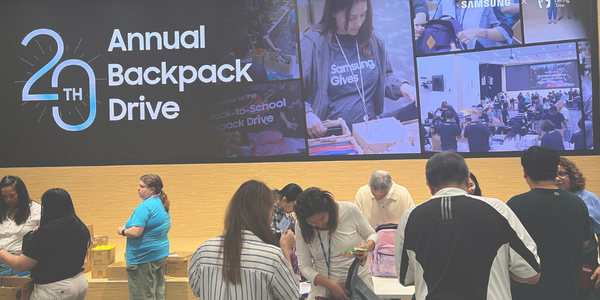
For 20 years, Samsung Semiconductor has stood alongside Family Giving Tree through financial support, employee volunteerism, and an enduring commitment to giving back. Over two decades, that partnership has grown from individual volunteer events into a lasting collaboration built on a shared commitment to helping Bay Area students thrive. From packing backpacks during our Back-to-School Drive to supporting our programs in countless ways over the years, Samsung employees have continually shown up with generosity, enthusiasm, and a spirit of service.
A Shared Investment in Students
While our organizations serve the community in different ways, we share a common belief: every child deserves the opportunity to learn, grow, and reach their full potential.
Samsung's corporate citizenship initiatives have long championed education, particularly by helping students develop the science, technology, engineering, and math (STEM) skills that will prepare them for the future. Through programs that encourage innovation, creativity, and problem-solving, Samsung is helping inspire the next generation of leaders and innovators.
Preparing students for the future starts with preparing them for the first day of school.
Before students can realize their dream of becoming engineers, programmers, scientists, or inventors, they need the basic tools that allow them to participate fully in school. A backpack, notebooks, pencils, and other classroom essentials may seem simple, but they create the foundation that allows students to learn with confidence, engage in their education, and discover what's possible. Tools that allow them to complete that math homework, write up those notes about the science lab they completed, or finish that long-term assignment due the next day.
Twenty Years of Showing Up
This shared investment in students has helped shape our partnership for the past two decades.
Community impact is built on the foundation of that first volunteer day or that one first-time donation. It is built upon by the individuals and organizations that continue to show up, year after year. For 20 years, Samsung Semiconductor has done exactly that.
And just as meaningful as the support itself are the people behind it. Samsung employees have dedicated their time and talents to helping local students begin each school year prepared and ready to learn. Their hands-on commitment has become an important part of our shared story and a powerful example of what corporate volunteerism can accomplish.
Building a Brighter Future, Together
Together, we've helped thousands of students across the Bay Area receive the backpacks and school supplies they need to start school with confidence. Every backpack packed, every volunteer hour given, and every act of generosity has helped create brighter beginnings for local students.
As we celebrate this milestone, we're grateful not only for Samsung Semiconductor's generosity, but for the lasting partnership we've built together over the past 20 years.
To everyone at Samsung Semiconductor: thank you for two decades of believing in Bay Area students, investing in your community, and helping create brighter futures. We look forward to continuing this journey together.